
The True Cost of Buying a Waterfront Home in St. Petersburg Goes Beyond the Purchase Price
After touring more than 20 waterfront homes across Clearwater and St. Petersburg, Florida, Carly Majorana helped two California relocation buyers purchase a roughly $2.4 million home in the Shore Acres neighborhood. The property had a private dock, boat lift and pool, but its most valuable feature became clear after Hurricanes Helene and Milton: The higher-elevation home remained completely dry while properties only a few doors away flooded.
Majorana did not reach that result by comparing bedrooms, finishes and backyard views. She evaluated the water, elevation, flood history, seawall, dock, boat lift and pilings because each one could affect the buyers’ insurance costs, boating plans and long-term financial exposure.
Waterfront due diligence is the process of measuring a property’s flood risk, marine infrastructure and boating usability before treating the home’s purchase price as its true cost.
The Search Began With the Water, Not the House
The buyers, two airline pilots with young children, moved from California after reconnecting with Majorana through social media. Majorana and the buyer had met on their high school swim team, lost touch for almost 25 years and later reconnected after the buyer followed Majorana’s posts about boating and waterfront life in St. Petersburg.
The request was not simply to find a house near the water. The family wanted true boatable waterfront, a boat on a lift in the backyard, a pool and enough room for their children.
“My job was helping them compare the water, not just the houses,” Majorana said.
The buyers initially expected to purchase in Clearwater because their children attended school there. After touring more than 20 waterfront properties in Clearwater and St. Petersburg, they decided St. Petersburg offered the combination they valued most: direct boating access to Tampa Bay and proximity to downtown destinations such as Beach Drive, the St. Pete Pier and Vinoy Park.
Majorana made sure that lifestyle decision still worked at the property level. She considered whether the canal and dock could accommodate the buyers’ future boat, whether the lift had sufficient capacity and whether the existing pilings could support the equipment without expensive modifications.
That scrutiny separated a waterfront view from a functional waterfront purchase. A home could meet the family’s space requirements and still create a major post-closing expense if its dock, lift or seawall did not match the way the buyers intended to use it.
Elevation Separated One Home From the Rest of the Street
Flood exposure became personal before the buyers closed. They moved to Florida in July 2024 and rented a home while Majorana guided their search, but Hurricanes Helene and Milton struck before they found the right property.
Their rental took on approximately four feet of water. The family lost nearly everything it had moved from California, yet the buyers chose to continue pursuing a waterfront home in St. Petersburg.
Three days after Helene, when residents could begin returning to Shore Acres, the buyers asked Majorana to show them a property in the neighborhood. She warned them that the community had suffered extensive flooding and prepared them for what they would see.
The house they toured told a more precise story than the neighborhood’s overall damage. It sat on one of the higher-elevation lots on the street and had remained dry even as nearby properties flooded.
“Two homes can sit on the same street in St. Pete, and one floods while the other doesn’t,” Majorana said. “The elevation certificate tells you which is which before you buy.”
Majorana used the elevation certificate and the property’s documented storm performance to distinguish its risk profile from surrounding homes. That distinction affected more than the buyers’ comfort level; it influenced the home’s insurance considerations, resale position and relative value in a post-hurricane market.
Her approach also prevented the buyers from treating every Shore Acres property as financially interchangeable. A lower purchase price on a nearby home could lose its advantage if the property carried greater flood exposure, repair needs or insurance costs. eparation gives them a cleaner path from offer to inspection to attorney review to closing because fewer decisions are being made under pressure.
The Inspection Period Extended Into the Backyard
Majorana treated the standard home inspection as only one part of the buyers’ due diligence. She also directed attention to the seawall, dock, boat lift, pilings, elevation certificate and flood history because those components would shape the family’s ability to use and maintain the property.
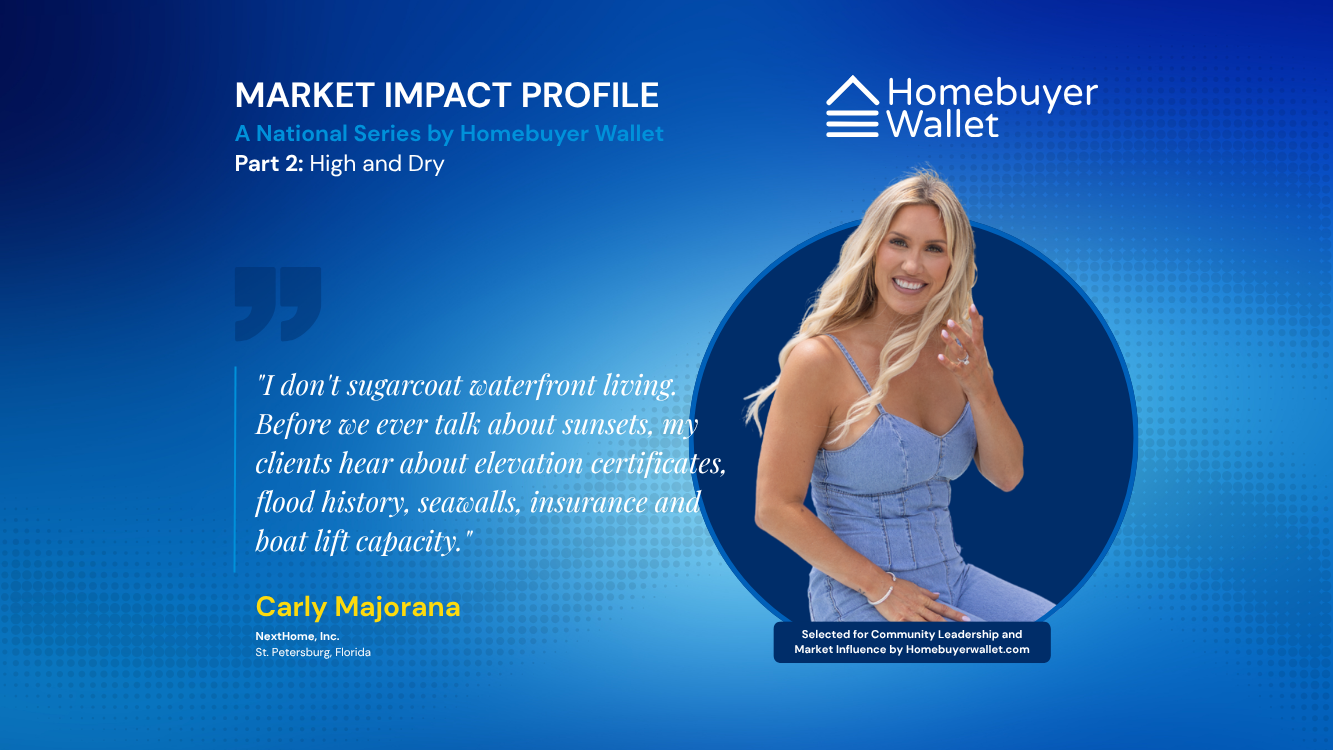
“I don’t sugarcoat waterfront living,” Majorana said. “Before we ever talk about sunsets, my clients hear about elevation certificates, flood history, seawalls, insurance and boat lift capacity.”
The boat lift required more than a visual review. While the home was under contract, Majorana and the buyers traveled to the Fort Lauderdale International Boat Show to research the type and size of boat the family planned to purchase.
That trip allowed them to compare their future vessel with the lift’s capacity and the existing piling configuration before the inspection and decision-making period ended. Confirming compatibility helped the buyers avoid discovering after closing that they needed to replace the lift, alter the pilings or redesign the dock.
Majorana’s process connected the purchase contract to the family’s actual waterfront plans. Rather than treating the boat as a future lifestyle purchase unrelated to the real estate transaction, she considered it part of the home’s functional and financial evaluation.
Post-Hurricane Uncertainty Created Negotiating Leverage
The home had originally been listed near $2.7 million, but the buyers purchased it for approximately $2.4 million. Majorana negotiated in a market with nervous buyers, uncertain sellers and few comparable sales that reflected the difference between flooded and high-and-dry waterfront properties.
Her assessment was that the market had not yet fully priced the value of a higher-elevation home that remained dry during Helene. She recommended moving decisively while still negotiating the issues that materially affected the property’s value and usability.
The buyers’ extensive search gave that strategy credibility. After seeing more than 20 waterfront properties in two Pinellas County cities, they understood how rarely the right combination of elevation, boating access, dock infrastructure, pool space and family function appeared.
“We negotiated hard on the items that counted and didn’t lose the house over the ones that didn’t,” Majorana said.
Majorana also advised the buyers to plan for at least a five-year ownership period. Immediately after the hurricanes, flooded properties could sell at depressed prices before repairs, reconstruction and clearer market data established a more reliable value pattern.
“Think long term,” she told them.
That advice kept the buyers from relying on a quick resale to justify the purchase. They bought because the home’s physical advantages and waterfront function supported their family’s long-term plans, not because Majorana promised a predictable short-term gain in an unsettled neighborhood.
The Appraisal Had to Recognize What the Comparable Sales Could Not
The appraisal became one of the transaction’s largest hurdles because recent comparable sales offered an incomplete picture. Flooded homes down the street could not fully represent a property that had stayed dry, but the market had not yet produced enough post-storm sales to establish a clear premium.
Majorana and the transaction team used the Tidewater appraisal process to provide additional information before the valuation became final. They presented the elevation certificate, the home’s condition and evidence of the limited supply of higher-elevation waterfront properties in St. Petersburg.
The argument centered on a physical difference rather than a subjective claim. The selected property had demonstrated that it could withstand conditions that caused severe damage nearby, and that performance supported its position within the market.
The appraisal effort also showed why waterfront value cannot always be reduced to square footage and distance. Majorana needed the appraiser to account for elevation, storm history and functional marine improvements because those features shaped both demand and future ownership risk.
The Purchase Price Was Only the First Financial Threshold
A $2.4 million contract price gives buyers only a partial view of the capital required to own a St. Petersburg waterfront home. With a hypothetical 20% down payment, the buyers would bring $480,000 toward the purchase price and finance approximately $1.92 million before accounting for closing costs.
Closing costs would depend on the loan structure, prepaid taxes, insurance, lender charges, title expenses and other transaction-specific items. The monthly housing obligation would also vary according to the mortgage rate and loan term, while property taxes, homeowners insurance and any required flood insurance would sit on top of principal and interest.
Majorana’s analysis extended to costs that do not appear in a standard mortgage estimate. The owners would also need to plan for pool care, seawall maintenance, dock repairs, boat lift servicing, piling work and storm preparation.
The property did not have an applicable condominium or homeowners association fee mentioned in the transaction. That removed one recurring expense, but it placed responsibility for the home’s waterfront infrastructure directly on the owners.
No down payment assistance program, closing-cost grant, builder incentive or employer housing initiative drove this purchase. HomebuyerWallet can help buyers search for Community Home Investment Programs and other cost-reduction opportunities when those resources fit the buyer and property, but Majorana’s central savings strategy in this transaction was preventing an expensive mistake before closing.
She reduced risk by identifying the higher-elevation property, validating the marine infrastructure and negotiating approximately $300,000 below the original asking price. The buyers did not simply purchase the waterfront life they wanted; they understood which parts of the property protected that life and which costs they would be responsible for carrying.
Months after closing, Majorana watched the family arrive at a local sandbar in its own boat, launched from its own dock. The moment reflected the lifestyle the buyer had first described from California, but it also validated the unglamorous work that made the purchase sustainable.
Majorana’s value rested in telling the buyers what the waterfront photographs could not. By placing elevation, flood performance and boating infrastructure ahead of the sunset view, she gave a family that had already lost nearly everything in two hurricanes enough information to confidently remain in St. Petersburg.