
How One Columbia First-Time Buyer Got to Closing With Just $392
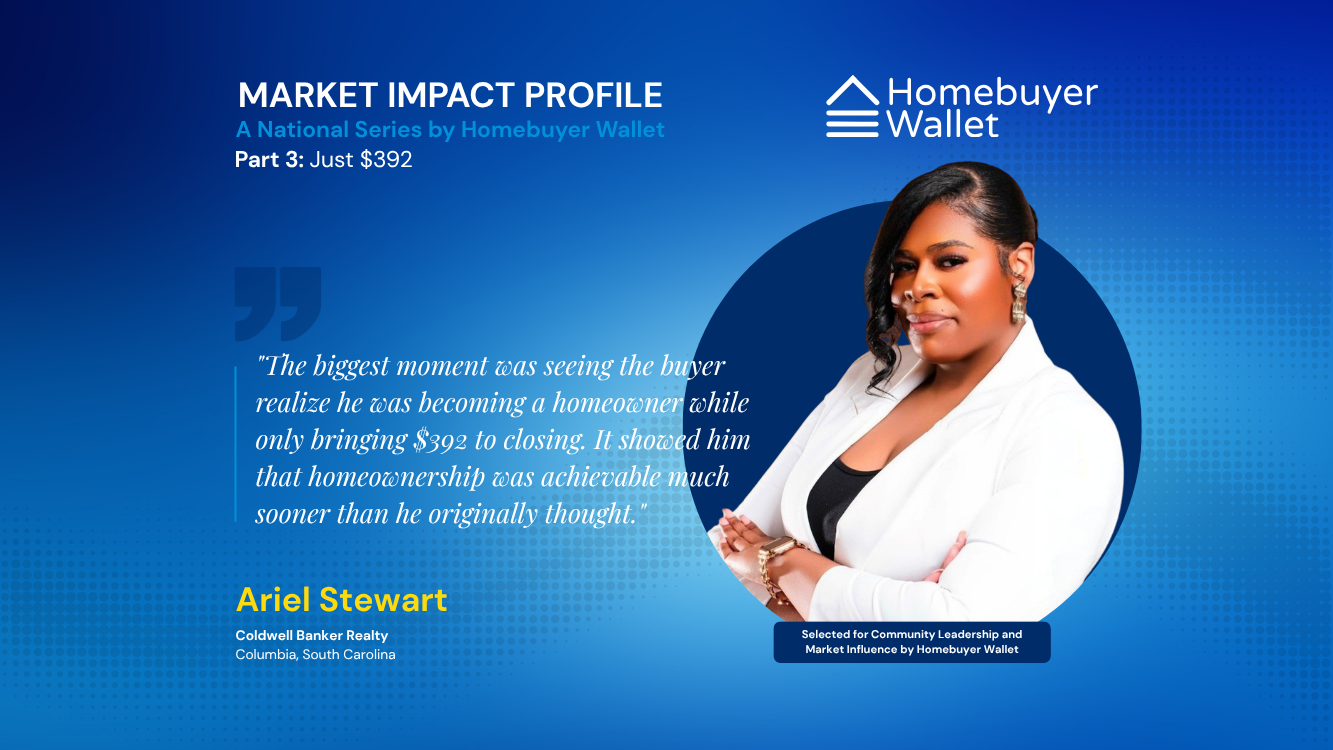
Ariel Stewart helped a first-time buyer in his early 20s purchase a single-family home in Columbia, South Carolina, while bringing only $392 to closing. That outcome did not come from luck or a dramatic price cut. It came from treating the purchase as a financial structure, where seller-paid closing costs, financing choices, lender coordination and contract timing all had to work together.
The buyer came to Stewart through his mother, who was already one of Stewart’s clients. He did not just need someone to unlock doors. He needed someone who could explain how buying worked in Columbia, South Carolina, and show him how the numbers moved from offer to closing table.
The true cost of buying is the amount a buyer must actually carry through the transaction, not just the price printed on the contract.
The Purchase Had to Be Built Around Cash to Close
The buyer wanted to become a homeowner young, but he also wanted to protect his cash. In an affordable entry-level purchase, that distinction matters because a lower price does not automatically mean an easier closing. A buyer still has to manage the down payment, closing costs, lender requirements, insurance, prepaid expenses and any timeline changes that affect the final settlement statement.
Stewart centered the transaction on that reality from the beginning. She did not let the buyer measure success only by the sales price because the wrong structure could still leave him short at closing. “I encouraged him to stay focused on the overall financial picture rather than just the sales price,” Stewart said. “Structuring the transaction properly was more important than simply negotiating a lower number.”
That advice shaped the entire offer strategy. A cheaper contract price would not have solved the buyer’s main problem if it failed to reduce his upfront obligation. Stewart’s work focused on the number that would decide whether the buyer could comfortably complete the purchase: the amount he needed to bring to closing.
Entry-Level Buying Required More Than Property Search
The Columbia, South Carolina, transaction involved a single-family home in the affordable entry-level price range. For a first-time buyer in his early 20s, that meant every part of the process had to be explained clearly before it became a decision point. The buyer needed to understand not only what he could afford, but how the purchase would actually move through financing, negotiations and closing.
Stewart approached the transaction as an education process as much as a home search. The buyer’s mother connected him with Stewart because he wanted guidance on the financial side of purchasing a home, not just help finding properties. That relationship gave Stewart a responsibility to slow the process down where needed and make each step understandable without weakening the buyer’s position.
That mattered because first-time buyers often experience the process as a string of disconnected costs. Stewart had to connect each piece for this buyer: how the offer affected concessions, how concessions affected the lender review, how lender coordination affected closing, and how the final numbers determined whether the buyer could preserve cash while still becoming a homeowner.
Seller-Paid Closing Costs Became the Main Leverage Point
Stewart’s offer strategy focused on negotiating seller-paid closing costs while keeping the buyer’s offer competitive. That choice matched the buyer’s actual goal. He wanted to buy now, but he needed a structure that minimized out-of-pocket expenses without making the deal unattractive to the seller.
“We focused on negotiating seller-paid closing costs and identifying financing programs that aligned with his financial goals while still keeping the offer competitive,” Stewart said. The transcript does not identify a specific official program by name, so no named assistance program should be treated as part of this transaction. The relevant strategy was Stewart’s use of financing options and seller concessions to reduce the buyer’s cash burden.
That distinction is important. Stewart did not simply tell the buyer to look for help somewhere else. She built the negotiation around the buyer’s financial limits and then coordinated the transaction so the concessions, lender requirements and closing timeline supported the same outcome. The seller-paid costs were not a side benefit. They were the central mechanism that helped turn an affordable home search into a workable purchase.
Financing and Timelines Had to Move as One System
The transaction required careful coordination because every adjustment changed the buyer’s final cash needed at closing. Stewart had to manage lender communication, concession details and timeline expectations at the same time. If one piece moved without the others, the buyer’s closing number could change.
“There were several moving parts involving lender coordination and closing cost negotiations, but I stayed proactive with communication between all parties to keep the transaction moving smoothly,” Stewart said. Her role was not limited to writing the offer. She had to keep the people and paperwork aligned after the contract was accepted.
That coordination became even more important because the seller side created friction. Stewart said the seller had difficulty understanding the process because of weak guidance from the seller’s agent. Instead of letting that confusion slow the transaction or create avoidable conflict, Stewart kept communication active and focused on the steps needed to get the deal closed.
“Coordinating financing, concessions, and timelines required the most attention because every adjustment directly impacted the buyer’s cash needed at closing,” Stewart said. That sentence captures the real mechanics of the deal. The buyer’s $392 closing result depended on the transaction staying financially aligned from negotiation through settlement.
The Closing Number Changed the Buyer’s View of Homeownership
The defining moment came when the buyer understood that he was becoming a homeowner with only $392 due at closing. For a buyer in his early 20s, that number changed the meaning of the process. Homeownership stopped feeling distant and became something he could complete with the right structure.
“The biggest moment was seeing the buyer realize he was becoming a homeowner while only bringing $392 to closing,” Stewart said. “It showed him that homeownership was achievable much sooner than he originally thought.”
That result reflects how Stewart wants clients to experience real estate. She does not treat accessibility as a slogan. She builds it through education, negotiation and financial planning. “It reflects my focus on education, strategy, and financial planning,” Stewart said. “I want clients to understand their options and feel empowered throughout the process.”
Accessibility Came From Strategy, Not Simplification
Stewart’s work in Columbia, South Carolina, shows how a first-time buyer’s path can change when the agent treats the process as a financial plan. The buyer still had to qualify, choose the right property, negotiate effectively and make it through closing. Stewart’s value came from making those steps work together instead of allowing each one to create a new cash obstacle.
That is especially important for younger buyers and families who may assume they need far more money upfront before they can begin. Stewart’s approach does not minimize the complexity of buying. It makes the complexity usable by turning the process into a sequence of decisions that protect the buyer’s actual financial position.
“One thing that stands out about my approach is that I focus heavily on making real estate feel accessible rather than overwhelming,” Stewart said. “I enjoy helping younger buyers and families understand that with the right strategy and guidance, homeownership can still be attainable even in changing market conditions.”
For this Columbia buyer, the proof was not abstract. It appeared on the closing statement. With seller-paid closing costs, financing coordination and a transaction strategy built around cash to close, Stewart helped a first-time buyer move from uncertainty to ownership with only $392 needed at the table.
Want to connect with Ariel? You can follow him on Instagram, Facebook, TikTok, or LinkedIn, for more details send him an email directly.